
The UK’s top policy fraud hotspots revealed
13 October 2025
For the first time, an analysis of over 2.4 million insurance policies by the Insurance Fraud Bureau (IFB) has revealed the top policy fraud hotspots, as the public are warned of a rise in identity theft.
The UK’s worst-affected areas for policy fraud have been revealed to help protect people at risk, following record-high cases of identity theft.
Policy fraud is when an insurance application is made using stolen or false details. Much of this involves criminals stealing personal information to take out fraudulent policies that enable wider scams, leaving victims in distress and financial hardship. Other cases include people misrepresenting their own information to reduce premiums.
IFB’s analysis of over 2.4 million policies found that areas in West Yorkshire, Greater Manchester and the West Midlands top the list for England. While Glasgow leads in Scotland, areas in the Isle of Anglesey in Wales, and County Fermanagh in Northern Ireland top their respective hotspot lists.
The hotspots follow an unprecedented rise in identity theft, with the IFB reporting a sevenfold increase in stolen details used for insurance scams over the past year. As a result, the public is urged to watch out for signs of their details being misused and report insurance fraud to CheatLine.
Twisting the truth on insurance applications
While identity theft is a key driver in policy fraud, there may also be instances of opportunistic fraud in hotspot areas, with people using false details to reduce insurance costs, such as by submitting a false no claims discount (NCD) or not disclosing a full driving history.
A YouGov survey (commissioned by the IFB in 2024) found that nearly one in five people (17%) would find it acceptable to lie on an insurance application to help save money - an issue potentially linked to financial hardship.
To help protect people from making a costly mistake, the IFB has been reminding the public through its ongoing Fraud Cons campaign, that what might seem like a small lie to save on the cost of insurance is still fraud. This could lead to a record on the Insurance Fraud Register (IFR), making it harder to get insurance for years to come, and a potential criminal charge.
Ghost broking – victim or perpetrator?
Some holders of ghost broking policies – the term referring to policies created by scammers posing as legitimate insurance brokers to sell fake motor insurance policies – may have fallen victim to the scam via social media. However, others may be fully aware of what they’ve purchased and the insurance fraud they’re a part of.
Identity theft is a key driver of fraudulent insurance applications, with ghost broking schemes frequently using stolen and manipulated personal information.
By taking out a policy with a ghost broker, the policyholder can save a substantial sum in comparison to a legitimate policy. Once again, this can be linked to issues of financial hardship. Perpetrators may also attempt to utilise ghost broking policies to fool police during roadside stops, especially in instances where they would be unable to obtain a policy from a reputable provider – this includes individuals driving on disqualified licences.
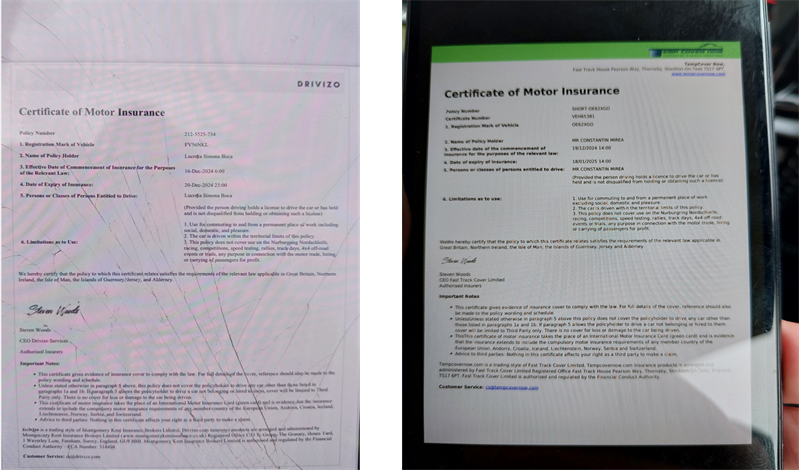
Example ghost broking policies
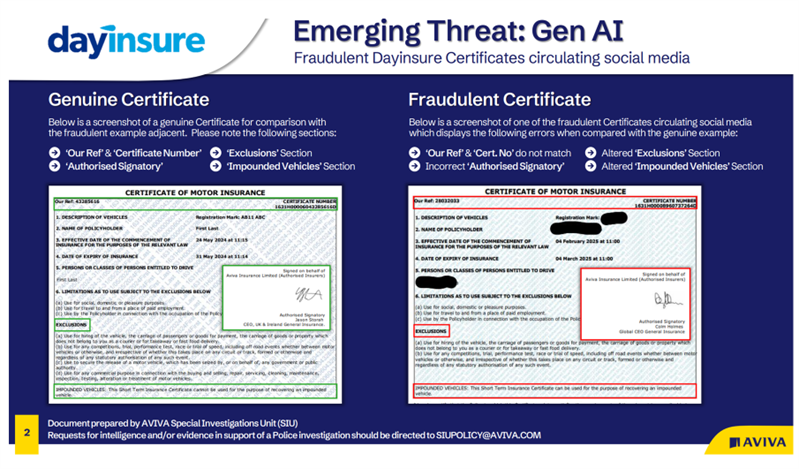
Fraudsters will also use legitimate looking templates for well-known insurers such as Aviva, Admiral, Veygo, Haven
Jon Radford, Head of Intelligence, Investigations and Data Services at the IFB, said: “Insurance scams using stolen details are on the rise, indicating more people are being targeted with identity theft. We’ve launched a Prevention campaign to urge everyone to stay alert, particularly those in hotspot areas, against signs of their personal information being used in fraudulent insurance applications.
“While anyone can be targeted, insights suggest insurance fraudsters often steal details from those they believe are cheaper and easier to insure - including people over 60, or individuals seen as financially secure or low-risk.
“We’re working with insurers, police and industry watchdogs to tackle the issue and urge anyone who thinks their details have been used in an insurance scam to report it to our CheatLine.”
Report insurance fraud
The IFB is a not-for-profit organisation which leads the insurance industry’s collective fight against insurance fraud. Evidence of an insurance scam can be reported to the IFB’s confidential CheatLine online or via 0800 422 0421.
City of London Police's IFED’s Op Devoran also accepts intelligence on suspected ghost broking instances from forces, including the outcome e.g. vehicle seized, process contemplated, etc. Complete intelligence on your system and request your Force intelligence Bureau to share the intelligence with City of London Police, sending it to IST@cityoflondon.police.uk marked as OP DEVORAN.
Advice is available to help anyone who believes their details may have been used in policy fraud.